A Contemporary Story
Why are stories so important? Because they can define our actions AND our REALITY. The point of this section is not to convince you about the rights and wrongs of what is unfolding but how what I have referred to as “story” is used (or misused).The blog today is an attempt to illustrate why what has been written is valid and important...
--------------------------------------------------------------------------------------
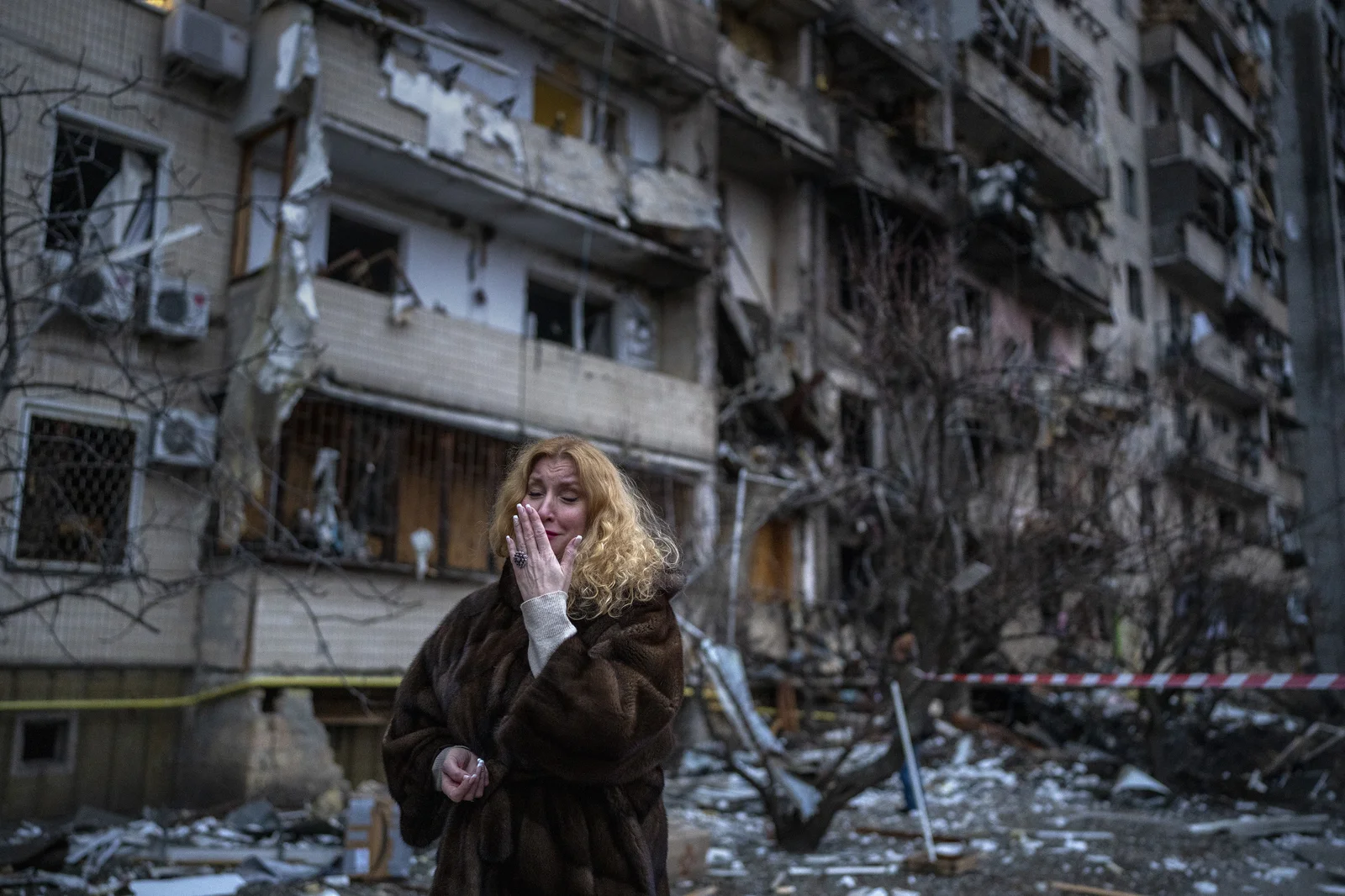
Russia invades Ukraine. Over 100,000 Russian troops massed at the border then invaded.
Let me state that I am by no means an expert on the area nor their history. However, the basis of the war is a “story”. I will try to be as factual as possible, but some conjectures will emerge.
The following was written before the invasion of Ukraine, and I have changed the order of the article. My comments are in brackets.
(The story) : Last July, President Putin published a strange missive about Ukraine and Russia and their historical relationship. It presents the kind of argument that makes historians wince. The basic idea is that a thousand years ago there was a country called Rus, the most important city in Rus was Kyiv, and now a thousand years later Kyiv is the capital of Ukraine, and therefore Ukraine cannot be a real country, and everyone involved, and their descendants must be Russians or a brotherly nation to Russians…. Moscow did not exist at the time, Kyiv was not ruled from Moscow until late in its history, the story of the brotherly nations is recent, as for that matter is national identity in the modern sense. But you can't really engage in historical argument with people who are set on believing a myth, let alone with presidents who believe that the past is just there to confirm their present prejudices.
An invasion of Ukraine would be a horror for Ukrainians, who have done nothing to provoke it. Ukraine has about fourteen thousand war dead and about two million internal refugees from the last Russian invasion, and the suffering this time would be much worse. (The Washington Post Isabelle Khurshadyan, reported Feb. 25, 2022 “The Kremlin has repeatedly referred to Ukraine as a "brotherly nation." But we witnessed hundreds of people huddling together in fear of airstrikes in the underground metro. They don't have a lot of brotherly love for the country that forced them to shelter there.)
There are people in the Kremlin and in the Russian armed forces who know perfectly well that Putin's view of Ukraine does not conform to reality. If it did so, Ukrainians would have welcomed Russia's last invasion.
In 2014, the Russian invasion of Ukraine was part of a larger offensive against democracy in Europe and the United States. Russia was able to drive its own political memes through western media, and even create doubt about its own offensive operations as they were underway. Russia's propaganda victory in Ukraine in 2014 spurred it on to cyberwarfare against members of the European Union and the United States.
This time around, Russian propaganda has been much less effective. Putin’s threat to invade Ukraine is clearly linked to Europe and the United States, but this time perhaps in a different way. Rather than invading without warning, Russia has ostentatiously prepared for an invasion, and then warned the West that whatever happens is all their fault. Russia has elbowed the Europeans aside, insisting on speaking directly with the Americans. This has brought Ukraine (yet again) to American domestic politics, in a configuration that is awkward for President Biden. Perhaps that is the point.
Obviously the treaty was broken, and nothing was
done to enforce it.
Russia annexed Crimea in 2014, fomented a
separatist rebellion in the east soon after and backed the rebels militarily,
and on Monday announced it was recognizing the two breakaway territories as
states, striking at Ukraine's territorial integrity. Russia's President
Vladimir Putin invaded, using the false pretext that Ukraine was committing
"genocide."
Ukrainian leader Volodymyr Zelensky has been
invoking the Budapest Memorandum a lot lately, calling for security guarantees
for his country and saying if there were no such guarantees, then the country
must assume the treaty is "not working."
Zelensky had made clear his feelings that Ukraine
was betrayed and many other Ukrainians share that feeling.
Putin has claimed that justification for invading Ukraine is to “de-nazify” the country. Ukraine is led by a non-Nazi Jewish president.
In
case you missed it, story is important today and is used to justify actions. That is why this blog was created to help the
reader understand that story is based on fact, myths and fabrication to suit a
particular end. Try to know what fact and fiction is, then decide.
©
https://media.npr.org/assets/img/2022/02/25/ap22056245267903_custom-7ae403dbe7bfa0c5f8fcb609b0c5c9881a0ee521-s1600-c85.webp
https://www.washingtonpost.com/wp-apps/imrs.php?src=https://arc-anglerfish-washpost-prod-washpost.s3.amazonaws.com/public/I4MAQCUUCYI6ZOZROT6ANQFDUU.jpg&w=916


