Wikipedia

Search results

Friday, February 25, 2022

 A Contemporary Story 

Why are stories so important? Because they can define our actions AND our REALITY. The point of this section is not to convince you about the rights and wrongs of what is unfolding but how what I have referred to as “story” is used (or misused).The blog today is an attempt to illustrate why what has been written is valid and important... 

--------------------------------------------------------------------------------------

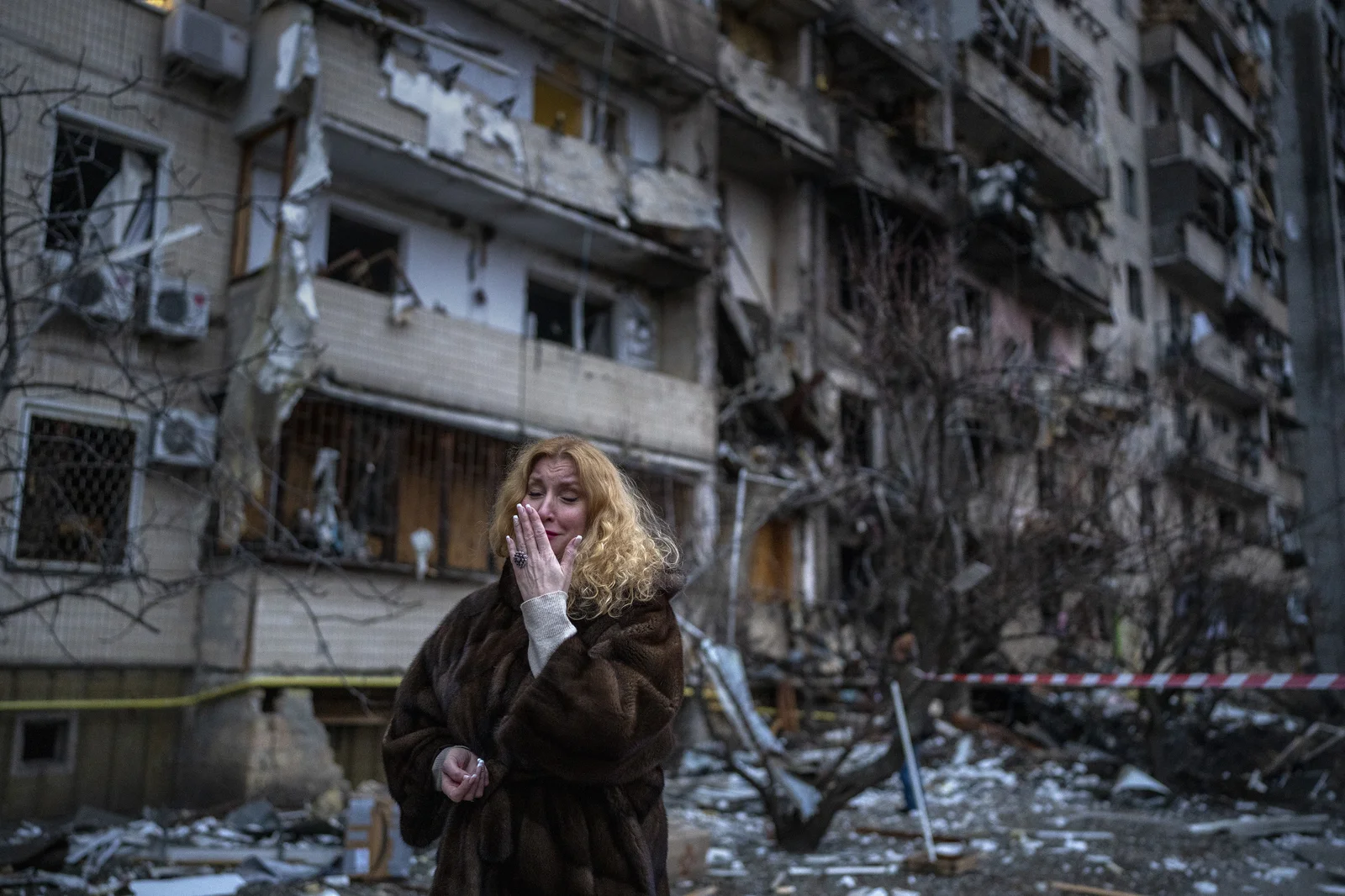
Russia invades Ukraine. Over 100,000 Russian troops massed at the border then invaded. 

Let me state that I am by no means an expert on the area nor their history. However, the basis of the war is a “story”. I will try to be as factual as possible, but some conjectures will emerge. 

The following was written before the invasion of Ukraine, and I have changed the order of the article. My comments are in brackets. 

(The story) : Last July, President Putin published a strange missive about Ukraine and Russia and their historical relationship.  It presents the kind of argument that makes historians wince.  The basic idea is that a thousand years ago there was a country called Rus, the most important city in Rus was Kyiv, and now a thousand years later Kyiv is the capital of Ukraine, and therefore Ukraine cannot be a real country, and everyone involved, and their descendants must be Russians or a brotherly nation to Russians….  Moscow did not exist at the time, Kyiv was not ruled from Moscow until late in its history, the story of the brotherly nations is recent, as for that matter is national identity in the modern sense.  But you can't really engage in historical argument with people who are set on believing a myth, let alone with presidents who believe that the past is just there to confirm their present prejudices. 

An invasion of Ukraine would be a horror for Ukrainians, who have done nothing to provoke it.  Ukraine has about fourteen thousand war dead and about two million internal refugees from the last Russian invasion, and the suffering this time would be much worse.  (The Washington Post Isabelle Khurshadyan, reported Feb. 25, 2022The Kremlin has repeatedly referred to Ukraine as a "brotherly nation." But we witnessed hundreds of people huddling together in fear of airstrikes in the underground metro. They don't have a lot of brotherly love for the country that forced them to shelter there. 

There are people in the Kremlin and in the Russian armed forces who know perfectly well that Putin's view of Ukraine does not conform to reality.  If it did so, Ukrainians would have welcomed Russia's last invasion.   

In 2014, the Russian invasion of Ukraine was part of a larger offensive against democracy in Europe and the United States.  Russia was able to drive its own political memes through western media, and even create doubt about its own offensive operations as they were underway.  Russia's propaganda victory in Ukraine in 2014 spurred it on to cyberwarfare against members of the European Union and the United States.  

This time around, Russian propaganda has been much less effective. Putin’s threat to invade Ukraine is clearly linked to Europe and the United States, but this time perhaps in a different way.  Rather than invading without warning, Russia has ostentatiously prepared for an invasion, and then warned the West that whatever happens is all their fault.  Russia has elbowed the Europeans aside, insisting on speaking directly with the Americans.  This has brought Ukraine (yet again) to American domestic politics, in a configuration that is awkward for President Biden.  Perhaps that is the point.   

https://snyder.substack.com/p/how-to-think-about-war-in-ukraine?utm_source=url&fbclid=IwAR3x2Svwq_jSJWQBbyhasbFaAP8OZMxFb_ozgZAH6X89ej4pShZtd9fODXI

 In 1994, Ukraine agreed to give up its nuclear weapons in return for security guarantees from Russia, the United States and Britain, under a treaty called the Budapest Memorandum. At the time, Ukraine was the third largest nuclear power.

Obviously the treaty was broken, and nothing was done to enforce it.

Russia annexed Crimea in 2014, fomented a separatist rebellion in the east soon after and backed the rebels militarily, and on Monday announced it was recognizing the two breakaway territories as states, striking at Ukraine's territorial integrity. Russia's President Vladimir Putin invaded, using the false pretext that Ukraine was committing "genocide."

Ukrainian leader Volodymyr Zelensky has been invoking the Budapest Memorandum a lot lately, calling for security guarantees for his country and saying if there were no such guarantees, then the country must assume the treaty is "not working."

Zelensky had made clear his feelings that Ukraine was betrayed and many other Ukrainians share that feeling.
 

https://www.washingtonpost.com/world/2022/02/25/questions-russia-ukraine-crisis-live-chat/?utm_source=alert&utm_medium=email&utm_campaign=wp_news_alert_revere&location=alert&wpmk=1&wpisrc=al_world__alert-world&pwapi_token=eyJ0eXAiOiJKV1QiLCJhbGciOiJIUzI1NiJ9.eyJjb29raWVuYW1lIjoid3BfY3J0aWQiLCJpc3MiOiJDYXJ0YSIsImNvb2tpZXZhbHVlIjoiNWU5ODA4YzRhZGU0ZTI1NzM1M2M4YWY4IiwidGFnIjoid3BfbmV3c19hbGVydF9yZXZlcmUiLCJ1cmwiOiJodHRwczovL3d3dy53YXNoaW5ndG9ucG9zdC5jb20vd29ybGQvMjAyMi8wMi8yNS9xdWVzdGlvbnMtcnVzc2lhLXVrcmFpbmUtY3Jpc2lzLWxpdmUtY2hhdC8_dXRtX3NvdXJjZT1hbGVydCZ1dG1fbWVkaXVtPWVtYWlsJnV0bV9jYW1wYWlnbj13cF9uZXdzX2FsZXJ0X3JldmVyZSZsb2NhdGlvbj1hbGVydCZ3cG1rPTEmd3Bpc3JjPWFsX3dvcmxkX19hbGVydC13b3JsZCJ9.YlXRp_f2yG8QbYlK2rNcgFbJd7pnvlul31fKr-xEu-Q 

Putin has claimed that justification for invading Ukraine is to “de-nazify” the country. Ukraine is led by a non-Nazi Jewish president. 

In case you missed it, story is important today and is used to justify actions.  That is why this blog was created to help the reader understand that story is based on fact, myths and fabrication to suit a particular end. Try to know what fact and fiction is, then decide.

©

https://media.npr.org/assets/img/2022/02/25/ap22056245267903_custom-7ae403dbe7bfa0c5f8fcb609b0c5c9881a0ee521-s1600-c85.webp


https://media.npr.org/assets/img/2022/02/25/ap22055762688565_custom-fdd044da579c2f366052a8b7e53254d2be6a9a03-s1600-c85.webp

https://www.washingtonpost.com/wp-apps/imrs.php?src=https://arc-anglerfish-washpost-prod-washpost.s3.amazonaws.com/public/I4MAQCUUCYI6ZOZROT6ANQFDUU.jpg&w=916


Thursday, February 10, 2022

Motivation and Story

Maslow’s hierarchy of needs provides a framework to consider what stories will resonate. If the group to which one is talking, is starving they are less concerned with the higher as they may fail to satisfy the most important rule – survival. Hence an agricultural surplus can provide the lowest level of needs and move on to the next level. A tribe can provide safety in numbers. Early unarmed Homo Sapiens are no match for large predators but in a group, armed and coordinated hunting party can ward off predators and successfully hunt game larger than themselves. The hunting party and the tribe can satisfy love and belongingness as well as self-esteem as the hunting party had to be successful for hunter gatherers to survive and thrive. The hunting party could be used for self defense (or attack) against other tribes. (Wow! This is not hard to see how the hunting party would have higher status. There are many concepts not yet discussed such as Status, Power, Leadership, Politics, Economics etc. …later….) 

Human beings have survived because they are social animals.  Our earliest ancestors were small and weak compared to the animals with which they competed.  Early and present humans did not possess obvious advantages such as incredible strength, the sharpest fangs or claws, sensory skills like smell or sight or even quickness. What kept us alive was banding together so our lack in every regard was compensated by the many AND the ability to convey what one saw to the group. This helped develop sensitivity to emotion, facial and verbal language. The advantage they had was a superior intellect and the ability to be able to work as a team. 

What draws us to certain individuals or to certain groups?  At its primal level -- survival.  At a higher level, is a feeling of belonging.  Progressively it may be advancement, betterment, or curiosity with a sense of belonging. People need constants and a simplification of purpose.  The traditions that groups of people have reinforced their sense of oneness. (Perhaps a quote, but I can’t find the source). 

Motivation is literally the desire to do things. It's the difference between waking up before dawn to pound the pavement and lazing around the house all day. It's the crucial element in setting and attaining goals—and research shows you can influence your own levels of motivation and self-control.  https://www.psychologytoday.com/basics/motivation 

Motivation is simply what drives people to a particular end.  One of the biggest problems in human interactions is the belief that one can determine the motivation of another.  In simpler terms, "I know why you did what you did." (Perhaps a quote, but I can’t find the source). However, if an individual can figure out "I know why you did what you did." AND he/she can manipulate that to serve another end, a leader has been hatched (Leadership will be discussed later in more detail). Simplistically a leader tells a story that motivates a particular action. For example. A hunting leader can direct the hunt. A storyteller can conjure up a tale PRIOR to the hunt to motivate the group. 

Humans as per their drive to survive have always been interested in connecting with something greater than themselves. In prehistoric times, there is evidence that tribes had one of their group that could claim to connect with the spirits.  There were likely several reasons for this.  One was to gain advantage in the hunt. The spirits were called upon to help the tribe find and kill game.  The second may have been a form of propaganda.  If the tribe believed that connection to spirits would improve the odds of their success.  It was likely a self-fulfilling prophecy.  Henry Ford once said, if you believe you can, or you believe you can't, you're probably right.  If this propaganda was a successful it would help the tribe.  It would also add to the power of the individual who claimed to connect with the spirits.  Whether he did or did not wasn’t important.  It was the perception that he did or did not.    

Often in motivation - story (belief) is considerably more important than fact. 

This is as important now as it always was. Consider the present political divide. Either side often accuses the other of falsifying the issues. Say side A accuses side B of falsifying the issues. Even if side B is proven correct it is often the case that few if any of side A will be moved to change their view. My conclusion is that is because side A’s view is a belief (and facts can be ignored). It is hard to change beliefs with facts. ©

Saturday, January 22, 2022


Happiness  

What motivates people? This is a critical question for “the story” and how bands became tribes which led to civilization.

Key Factors

1)   1) Survive!

2)   2) Thrive! - Something one is good at

3)   3) The ability and freedom to be able to do #2 (autonomy or freedom)

4)   4) Relationships where one is appreciated/loved can love

 This all suggests a community, especially #3.

Maslow's Hierarchy of Needs

Maslow (1943) initially stated that individuals must satisfy lower level deficit needs before progressing on to meet higher level growth needs. However, he later clarified that satisfaction of a needs is not an “all-or-none” phenomenon, admitting that his earlier statements may have given “the false impression that a need must be satisfied 100 percent before the next need emerges” (1987, p. 69). When a deficit need has been more or less satisfied it will go away. Our activities move toward the next set of needs. 

The original hierarchy of needs 5 stage model: 

Maslow (1943, 1954) stated that people are motivated to achieve certain needs and that some needs take precedence over others.

Our most basic need is for physical survival, and this will be the first thing that motivates our behavior. Once that level is fulfilled the next level up is what motivates us, and so on. 

1. Physiological needs these are biological requirement for human survival eg. air, food, drink, shelter, clothing, warmth, sex, sleep. If these needs are not satisfied the human body cannot function optimally. Maslow considered physiological needs the most important as all the other needs become secondary until these needs are met. 

2.Safety needs order, perdictability and control in their lives. police financial security medical care.

3. Love and belongingness needs - after physiological and safety needs have been fulfilled, the third level of human needs is social and involves feelings of belongingness. Belongingness, refers to a human emotional need for interpersonal relationships, affiliating, connectedness, and being part of a group.

4.Esteem needs self worth accomplishments, respect.

5. Self-actualization needs are the highest level in Maslow's hierarchy, and refer to the realization of a person's potential, self-fulfillment, seeking personal growth and peak experiences. Maslow (1943) describes this level as the desire to accomplish everything that one can, to become the most that one can be.

https://www.simplypsychology.org/maslow.html

Even in prehistoric environments stories that appealed to these needs likely had a potent grip. Clearly items 1,2.3 and even 4 were appealed in early societies to today. The cultural norms established helped realize even the 5th item.

Looked at another way but with similar criteria, it has been suggested that there are several factors that contribute toward happiness. This is an ”equation for happiness,” suggested by psychologist Dr. Martin Seligman:


H = S + C + V


H = Happiness
S = Set range (genetics: about 50%)
C = Circumstances (8-15%)
V = Voluntary Control (past, present, future)


This looks very scientific, and is actually based on research findings, but it can be explained quite simply:


Set range/genetics. There is some evidence to support that people are born with a certain “set-point” of happiness, which is determined by our genes. This is supposed to change only slightly, if at all, as we get older. Our genetic predisposition to happiness contributes around 50% to our level of happiness.
So if something dramatic happens—for example, you win the lottery or break up with your boyfriend or girlfriend—within a year or so (depending on the situation), your happiness level will return to its set point.

Circumstances. There’s also some evidence to suggest that the circumstance we live in influence our level of happiness. You don’t always have a lot of control over your circumstances—for example, we can’t all live in mansions and drive new cars. Evidence suggests, however, that this accounts for only about 8% to 15% of our happiness, which really isn’t that much.

Voluntary control. This third factor is the most important factor in the equation, because you can control it, and in the process control your happiness. It includes all aspects of your life over which you have a relatively high degree of control, including your thoughts and actions. This includes the way you choose to think about and act on the past, present, and future, and seems to have a significant impact on how happy you are—it could be up to 42%!

§  Past. When thinking about the past, people who are happier pay attention to what was good about the past, rather than focusing on the unhappy times. They are grateful, forgiving, and don’t believe that the past will determine what happens in the future. For more information on gratitude, for the past, check out the Gratitude, forgiveness and their influence on your happiness fact sheet.

§  Future. When it comes to thinking about the future, happy people are flexibly optimistic. What this means is that they are optimistic (in a realistic sense) about how their future is going to be, but if it doesn’t turn out that way, they know it’s not going to be the end of the world either.

§  Present. The way you think about and act in the present is also essential in determining how happy you are. This might include actions like taking pleasure in life and your surroundings, building and being in meaningful relationships, and the way we react to things in life, good and bad.


https://www.pursuit-of-happiness.org/history-of-happiness/martin-seligman-psychology/?gclid=CjwKCAiA0KmPBhBqEiwAJqKK4_SCXYCkk_SBDOoC5rg0C8kE3jChmWnenXYwgNc2BTQKAFbKCtMjjxoCqNUQAvD_BwE

In Tolstoy's Anna Karenina, "happy families are all alike, every unhappy family is unhappy in its own way."  This suggests that to be successful in a marriage, one must 1) have sexual attraction, 2) agreement on money, child-rearing, religion, relationship with in-laws, etc. a failure in any one area can doom with the relationship.

There are 2 ways to be rich - 1) earn more or 2) be happy with less.

Most folks are as happy as they make up their minds to be. Lincoln http://www.brainyquote.com/quotes/authors/a/abraham_lincoln.html

Key to Happiness: Toleration

If you don’t mind it doesn’t matter.

This is a derivative of

Age Is an Issue of Mind Over Matter. If You Don’t Mind, It Doesn’t Matter

Mark Twain? Jack Benny? Satchel Paige? Muhammad Ali? Unknown gerontology researcher? http://quoteinvestigator.com/

Jung answered the happiness question with:

1. Good physical and mental health.
2. Good personal and intimate relationships, such as those of marriage, the family, and friendships.
3. The faculty for perceiving beauty in art and nature.
4. Reasonable standards of living and satisfactory work.
5. A philosophic or religious point of view capable of coping successfully with the vicissitudes of life.”


Viktor Frankl said something similar about the pursuit of happiness:

For success, like happiness, cannot be pursued; it must ensue, and it only does so as the unintended side-effect of one's personal dedication to a cause greater than oneself or as the by-product of one's surrender to a person other than oneself.

“We do not remember days, we remember moments.” – Cesare Pavese

http://gretchenrubin.com/happiness_project/2010/11/5-basic-factors-for-happiness-according-to-carl-jung/ 

In the Declaration of Independence We hold these truths to be self-evident, that all men are created equal, that they are endowed by their Creator with certain unalienable Rights, that among these are Life, Liberty and the pursuit of Happiness.

https://www.monticello.org/declaration/?ef_id=CjwKCAiA0KmPBhBqEiwAJqKK40tM53M5fc-VfQtXSyLtBx-jEEM_qVUJDnImv3LmV78OLDgdaoRrjRoCMwoQAvD_BwE:G:s&gclid=CjwKCAiA0KmPBhBqEiwAJqKK40tM53M5fc-VfQtXSyLtBx-jEEM_qVUJDnImv3LmV78OLDgdaoRrjRoCMwoQAvD_BwE

Most likely the “Happiness” of the Declaration was based on the concept of Eudaimonia.

Plato himself but believed by modern scholars to have been written by his immediate followers in the Academy, provides the following definition of the word eudaimonia: "The good composed of all goods; an ability which suffices for living well; perfection in respect of virtue; resources sufficient for a living creature."

…and the less subjective "human flourishing" is often preferred as a translation.

as Aristotle points out, saying that eudaimon life is a life which is objectively desirable, and means living well, is not saying very much. Everyone wants to be eudaimon; and everyone agrees that being eudaimon is related to faring well and to an individual's well-being. The really difficult question is to specify just what sort of activities enable one to live well. Aristotle presents various popular conceptions of the best life for human beings. The candidates that he mentions are a (1) life of pleasure, (2) a life of political activity, and (3) a philosophical life.

https://en.wikipedia.org/wiki/Eudaimonia

“Our story” is central to culture the identification of individuals to a group. It is also how leaders can manipulate people for good or evil. 

Further consideration: Study of Happiness

WORLD HAPPINESS REPORT 2017 Editors: John Helliwell, Richard Layard, and Jeffrey Sachs Associate Editors: Jan-Emmanuel De Neve, Haifang Huang and Shun Wang

This report lays out that generousity is important to one's happiness. ©


Noah Sillimann Photo

Sunday, November 28, 2021

Stories and Early Religion


It is time to step back and pull this all together. The cognitive revolution allowed homo sapiens to communicate store and decimate knowledge from place to place and through time. This didn’t happen instantly. Writing probably came after speech but for all we know primitive people may have used drawings in the sand or on stones to get an idea across. The point is cooperation requires coordination. Where do these elements come from?

Yuval Harari, in Sapiens: A Brief History of Humankind offers this

“Chimps. The alpha male usually wins his position not because he is physically stronger, but because he leads a large and stable coalition. These coalitions play a central part not only during overt struggles for the alpha position, but in almost all day-to-day activities. Members of a coalition spend more time together, share food, and help one another in times of trouble. There are clear limits to the size of groups that can be formed and maintained in such a way. In order to function, all members of a group must know each other intimately. Two chimpanzees who have never met, never fought, and never engaged in mutual grooming will not know whether they can trust one another, whether it would be worthwhile to help one another, and which of them ranks higher. Under natural conditions, a typical chimpanzee troop consists of about twenty to fifty individuals. As the number of chimpanzees in a troop increases, the social order destabilises, eventually leading to a rupture and the formation of a new troop by some of the animals. Only in a handful of cases have zoologists observed groups larger than a hundred. Separate groups seldom cooperate, and tend to compete for territory and food. Researchers have documented prolonged warfare between groups, and even one case of ‘genocidal’ activity in which one troop systematically slaughtered most members of a neighbouring band.” (Harari, Sapiens: A Brief History of Humankind).

So, homo sapiens eventually had a larger tribe. Harari further suggests, “The secret was probably the appearance of fiction. Large numbers of strangers can cooperate successfully by believing in common myths. …Unlike lying, an imagined reality is something that everyone believes in, and as long as this communal belief persists, the imagined reality exerts force in the world. “(Harari, Sapiens: A Brief History of Humankind).

“Most people probably enjoyed the close intimacy of the roaming band, but those unfortunates who incurred the hostility or mockery of their fellow band members probably suffered terribly. Modern foragers occasionally abandon and even kill old or disabled people who cannot keep up with the band. Unwanted babies and children may be slain, and there are even cases of religiously inspired human sacrifice.” (Harari, Sapiens: A Brief History of Humankind).

It seems likely that stories bonded homo sapiens in the past and present. The trust in those beliefs allowed a larger group to be accepting of others. If one believes as another individual, they are bound by those beliefs. There are a wide variety of implications. If one doesn’t know how the earth began one could make a story as a hypothesis OR over time it could be a cult or even a religion. The simple need for humans to understand how or where they came from is incredibly powerful. Those people can become the people of something greater than themselves, the people of the creator. If one makes this creator a god or God the people are the children of God. If we are all children of God then we are bound together. We can defend ourselves, our beliefs, our tribe. But defend against who? Anybody or thing NOT like us!

Religion is a story that exists to fill the gaps in any reality that humans inhabit. It can be the means to explain the unexplainable. Religion often explains creation via myth, represents good versus evil (or order versus chaos), give purpose to existence and the requirement of an ethical code that appeals to greater beings than oneself. It often includes the belief in and worship of a superhuman controlling power, especially a personal God or gods, tenets of faith (implying there are no empirical proof for faith) and systems of worship.

The early homo sapiens did not judge anything with logic and reason. Those were concepts millennia in the future. Early people were often driven by fear. They wanted to be safe and secure. The daily interactions were with the physical world namely the sun, earth, wind, fire and water and characteristics that resulted namely rain, thunder, lightning, rockslides, and the animals they encountered. 

“Religion is unique to humans…Results indicate that the oldest trait of religion, present in the most recent common ancestor of present-day hunter-gatherers, was animism, in agreement with long-standing beliefs about the fundamental role of this trait. Belief in an afterlife emerged, followed by shamanism and ancestor worship. Ancestor spirits or high gods who are active in human affairs were absent in early humans, suggesting a deep history for the egalitarian nature of hunter-gatherer societies. https://www.ncbi.nlm.nih.gov/pmc/articles/PMC4958132/

Animists believe that there is no barrier between humans and other beings. They can all communicate directly through speech, song, dance and ceremony….Animism is not a specific religion. It is a generic name for thousands of very different religions, cults and beliefs. What makes all of them ‘animist’ is this common approach to the world and to man’s place in it. Saying that ancient foragers were probably animists is like saying that premodern agriculturists were mostly theists. Theism (from ‘theos’, ‘god’ in Greek) is the view that the universal order is based on a hierarchical relationship between humans and a small group of ethereal entities called gods. (Harari, Sapiens: A Brief History of Humankind).

“Ever since the Cognitive Revolution, Sapiens have thus been living in a dual reality. On the one hand, the objective reality of rivers, trees and lions; and on the other hand, the imagined reality of gods, nations and corporations. As time went by, the imagined reality became ever more powerful, so that today the very survival of rivers, trees and lions depends on the grace of imagined entities such as the United States and Google.” Harari, Yuval Noah. Sapiens: A Brief History of Human

Religion emerged from stories. Stories likely made the tribe larger as one could trust those with the same stories. Stories can help Humans conceive of structures larger than themselves or their understanding. What Harari means in the last paragraph “grace of imagined entities such as the United States and Google” is that nations and Google only exist because humans BELIEVE they do and continue to act as if they exist. They are a derivative of our legal system, which humans respect for the order they bring to our interactions. Nations and Google are a story. THAT WAS THE REVOLUTION OF THE LARGER TRIBE.

So far, we only discussed early religious developments. Clearly there has been an evolution of religion which is one of Homo sapiens earliest stories. ©


Friday, September 24, 2021

Civilization – a bigger tribe


Civilization – a bigger tribe

The basic thesis of Jared Diamond's book, Guns Germs and Steel, is that for civilization to develop we needed to move beyond the hunter gatherer society. Hunter gatherers were nomads who had to be able to survive in small groups on their own. This required extensive knowledge of how to survive by every individual. What this meant was that every hunter gatherer had to know what wild species of plants were good to eat or could cure ills. We had to be able to eat and survive.

A necessary condition for civilization was an agricultural surplus which allowed a specialization of tasks. Not every area of the globe is suitable to find wild species of food that could be domesticated.  Similarly, not every area of the globe has animals that can be suitable for domestication.  What has been described as the fertile crescent, and a variety of suitable plants and animals to get things started.  It had a Mediterranean climate, with wet mild winters and hot dry summers.  Plants that produce dormant seeds, often in abundance.  High percentage of self-pollination’s, which allowed consistent future generations, an important factor in producing consistent crops.  The fertile crescent also had advantages over other Mediterranean like climates.  First it was the biggest seasonal variations produced the biggest plant diversity.  There was a high percentage of annual plants and diverse elevations, which allowed for differing harvest times.  Other Mediterranean climates such as California, Chile, South Africa and Southwest Australia did not have these advantages.  Clearly extreme climates such as the Arctic or desert did not have these advantages.

There had to be a critical mass of plants and animals that could be domesticated.  The fertile crescent had this critical mass.  Once this was developed to wild ancestors could be exported to other areas.  Even today, a dozen or so crops account for 80% of food production.  These crops have been modified from the original to suit regional conditions.  The major five big herbivores domestic mammals, that still encompass our major farm animals today include sheep, goats, cows, pigs and horses.  The minors include camels llamas or alpacas, donkeys, reindeer, water buffalo and yak.  The wild ancestors of these animals were not spread evenly over the globe.  North America, Australia and sub-Saharan Africa had none, South America had only the llama and alpaca.  By contrast, Eurasia had most of these and all the major five.

Diamond comes to the following conclusion, "This unequal distribution of wild ancestral species among the contents became an important reason why Eurasians rather the peoples of other continents were the ones who end up with guns germs and steel."  The adoption of Eurasian grains and animals were the critical factor in building civilizations.  What is also necessary is an openness to adopt new things. Society must be willing to change and adapt to new technologies.

In short, an agricultural surplus provided the time for more activities than feeding and procreating like other animals. The societies that were the best at social cohesion, production, and technology development and had an advantage over other societies. Disease resistance or avoidance were also a critical factor. Social cohesion allows a group to band together to overcome an obstacle. Production allows for specialized soldiers and supplies them. Technology can overcome what otherwise could be a superior adversary. The introduction of new diseases to a population with little to no immunity was historically one of the main reasons that full or partial genocide was possible, even if it was unintended. ©


https://www.ancient-origins.net/history-important-events/life-sumer-sumerian-history-civilization-0010079

Tuesday, August 10, 2021

Further Exploration Guide 1: Conclusions so far

Further Exploration Guide 1: Conclusions so far


1)  There is a universe and humans have survived. That is the first necessary condition.

2)  There exist physical relationships in the universe such as time and space. Humans interpret these relationships through the mind and contrast is a critical concept to determine the physical relationships.

3)  Humans have cognitive powers to communicate, store and decimate knowledge from place to place and through time. This allows present-day humans to benefit from previous and current knowledge. 

4)   The human mind is the tool that allows the thought process that interprets the world, not only as it is (observation) but as it can be (imagination). Humans do not always make a clear division between the two. This is the clash between Rationality and Beliefs. This is the critical issue that allows for much human angst. 

WHY DOES THIS MATTER?

These are some of the building blocks to rational thought and separating truth from myths. 

Truths are unforgiving and cannot be manipulated. They do not care who you are or why you are motivated to do something. If one can’t breathe one will die in a short period.

Myths are stories and important to humans. It often binds them together for a common cause and often are the basis of identity beyond oneself, such as a tribe, a club, a religion, or a nation. Stories do care about motivation. The essence of stories are to manipulate for good or evil (but we have yet to discuss some of these concepts).

A hint of what is to come...

                Thesis: Geography is a key condition for Development of a Society. The institutions                 developed in those regions and their durability will have profound implications.

                Climate, crops and animals to be domesticated are a function of the environment.                    Food production and surplus are the necessary ingredient to feed an army and                        allow for specialization of trades, hence the development of technology. This took                    place after the Cognitive Revolution and the physical evolution of the voice box. ©


Monday, June 7, 2021

Dualism (Or How Humans Process Thought)


Dualism (Or How Humans Process Thought)

If a group can have cognitive function and communication there has to be some process to do so. 

The term dualism was originally coined to denote co-eternal, binary the opposition, a meaning that is preserved in metaphysical and philosophical duality discourse but has been more generalized in other usages to indicate a system which contains two essential parts.

Moral dualism is the belief of the great complement of or the conflict between the benevolent and the malevolent. 

dualism often refers to the dichotomy between the "subject" (the observer) and the "object" (the observed)

https://en.wikipedia.org/wiki/Dualism

The purpose of the dialectic method of reasoning is the resolution of disagreement through rational discussion, and, ultimately, the search for truth. One way to proceed—the Socratic method—is to show that a given hypothesis (with other admissions) leads to a contradiction; thus, forcing the withdrawal of the hypothesis as a candidate for truth (see reductio ad absurdum). Another dialectical resolution of disagreement is by denying a presupposition of the contending thesis and antithesis; thereby, proceeding to sublation (transcendence) to synthesis, a third thesis.

Fichtean/Hegelian dialectics is based upon four concepts:

1.   Everything is transient and finite, existing in the medium of time.

2.   Everything is composed of contradictions (opposing forces).

3.   Gradual changes lead to crises, turning points when one force overcomes its opponent force (quantitative change leads to qualitative change).

4.   Change is helical (periodic without returning to the same position), not circular (negation of the negation).

The concept of dialectic (as a unity of opposites) existed in the philosophy of Heraclitus of Ephesus, who proposed that everything is in constant change, as a result of inner strife and opposition.Hence, the history of the dialectical method is the history of philosophy.

https://en.wikipedia.org/wiki/Dialectic

For the world or the state of things as they actually exist, as opposed to an idealistic or notional idea of them https://en.wikipedia.org/wiki/Reality

Descartes in his Passions of the Soul and The Description of the Human Body suggested that the body works like a machine, that it has material properties. The mind (or soul), on the other hand, was described as a nonmaterial and does not follow the laws of nature. Descartes argued that the mind interacts with the body at the pineal gland. This form of dualism or duality proposes that the mind controls the body, but that the body can also influence the otherwise rational mind, such as when people act out of passion. https://en.wikipedia.org/wiki/Ren%C3%A9_Descartes#Dualism

There are 2 worlds the relative and the absolute. 

IMHO dualism suggests either this or that. What if there is an intermediate step, that of transition. If either a light is on (lit) or off (dark) there is a transitional state that exists when one goes from on to off or vice versa. One can cut the power but an electric light can continue to produce light, however briefly, as the transition period takes place. This can have a more universal application as being transitions from one experience to the next. This (perhaps?) may be thought of as a Hegelian step after the thesis and antithesis collide producing a transformative synthesis. ©


The Thesis Thus Far

The Thesis Thus Far   The treatise so far can be understood through three integrated layers:   I.                  The Human Condition (...